The journey home
The Journey Collection“The journey home” is the defining expression for Travis McCoy’s return to Clarendon, Texas, after more than a decade away. Its decisive significance lies in the way it converts physical travel into moral and emotional transformation: Travis comes back after a shoulder injury threatens the six-season professional football career that has shaped his identity, and he discovers that the past he tried to leave behind contains both the family he lost and the future he still can build.
Meaning and Origin
The expression is given its clearest form in Travis’s final exchange with Penelope Stone. After promising that he loves her and their son and will remain for as long as she wants him, Travis describes the experience as “the greatest journey.” When Penelope asks what journey he means, he answers, “The journey home.” The phrase therefore reaches beyond the mechanics of returning to Clarendon. It gathers the entire process of facing what he abandoned, accepting responsibility for Max, reopening his relationship with Russ McCoy, and recovering his love for Penelope Stone.
The wording also turns home into an achieved condition rather than a simple address. Travis has spent years away from the town, first pursuing college football at the University of Texas and then playing for the Miami Sharks. His return begins as an attempt to determine what comes next after his career is damaged, but it ends as a rediscovery of the people and commitments that make a place home. The journey is completed not when he reaches the town, but when he can imagine remaining within its relationships.
The Physical Return
Travis’s return begins in uncertainty. After his shoulder injury, he has removed the brace, but the joint remains stiff, painful, and severely limited in mobility. Rumors suggest that his career may be over. A letter from Jack Garrison inviting him to Clarendon for homecoming forces him to consider whether he can go back after the damage caused by his departure. Rather than reply to confirm his attendance, Travis books a flight to Texas, making the journey before he has fully explained it to anyone.
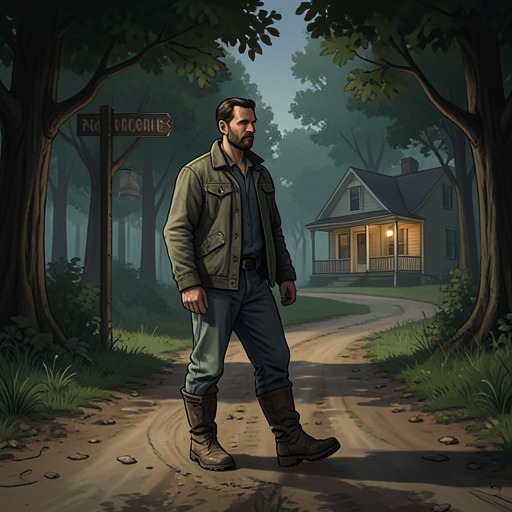
Once in Clarendon, he moves through familiar spaces that make the past tangible. He retrieves the keys to Bertha from the same kitchen nail where he left them a decade earlier and drives the black 1966 Pontiac GTO, the car that belonged to his mother, Loralie McCoy. The country road, the cool air through the open window, and the passenger seat where he can almost picture Penelope sitting restore a physical connection to the life he abandoned. Yet the drive also carries regret, because Travis remembers that he made everything better with Penelope and then ruined it by leaving.
The town itself appears largely unchanged. Clayton’s Groceries has fresh red paint and a new sign, and a convenience store has replaced two failed gas stations, but the bank, insurance offices, pharmacy, and public support for the local football team remain recognizable. The continuity unsettles Travis: the town has preserved the world he left even as his own life has been transformed by football, professional success, injury, and estrangement.
Homecoming and Recognition
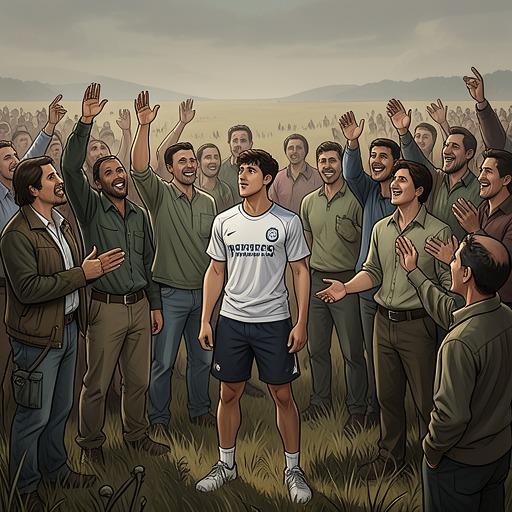
The homecoming pep rally becomes the first public threshold of Travis’s return. Parked outside the high school gymnasium, he hears the band’s fight song and the roar of students, fans, and parents. Inside, packed bleachers, maroon, white, and silver pompoms, varsity jerseys, and student-made posters recreate the Friday afternoons of his youth. The scene carries a double charge: Travis once hated and loved the attention of the community, and now he stands hidden at the edge of it, uncertain whether he still belongs.
The football field deepens that confrontation with the past. After joining the players in prayer and following them through the inflatable tunnel, Travis feels the grass beneath his shoes, sees the painted yard lines and the large maroon C, and remembers his senior year, when he tried to imagine a life after football. At that earlier moment, the offer from the University of Texas had not yet taken him away from Clarendon. Now the same field makes him question whether leaving had been worth what it cost him.
Later, Travis leads the Clarendon Broncos onto the field. At the fifty-yard line, he recognizes that the experience differs from the largest stadiums he has known: the crowd’s welcome is not based solely on athletic achievement but on the feeling of being home. He tells the players that the noise is for them because they have worked hard and earned the community’s respect. He urges them to show that the community’s faith has not been wasted and tells them that everyone is proud of the men they have become. By placing the boys, rather than victory, at the center of the moment, Travis begins to redefine football as service, mentorship, and communal belonging.
Family, Loss, and Repair
The return exposes the family consequences of Travis’s former ambitions. He discovers that Max is his son, and the recognition changes the meaning of everything he thought he had sacrificed for football. Travis had believed that leaving Clarendon cost him Penelope’s love and the life they might have shared; he now understands that it also cost him Max’s first steps, the opportunity to teach him to catch a baseball, and the first ten years in which Max might have called him “Dad.”
His relationship with Russ is equally transformed by the journey. Travis initially expected to spend his time avoiding questions about his future and regarded his father as cold-hearted and self-centered. Returning after Loralie’s death allows him to see Russ instead as a broken man struggling with the loss of the woman he loved. Their understanding remains difficult, especially because Travis blames Russ for not telling him that he had a son, but the journey creates the conditions for them to know each other more honestly.
The return is not presented as painless repair. Travis also remains wounded by Penelope’s decision to keep him outside Max’s life. He understands her argument that he would have chosen football over them, and he recognizes some truth in it, but understanding does not erase the grief of the years he missed. The journey home therefore requires him to hold love and accusation, responsibility and injury, together rather than treating reconciliation as a denial of harm.
From Return to Forever
The expression changes meaning as Travis moves from reunion toward permanence. When Russ accompanies him as he prepares to leave Clarendon temporarily, Russ tells him that the day is “a new start for both of us — a new journey.” Travis answers, “The journey to forever.” The phrase now points forward: home is no longer only the place he has revisited, but a continuing commitment to the relationships he has recovered.
That commitment becomes concrete in Travis’s relationship with Penelope and Max. He proposes to Penelope by telling her that he has loved her since he was fourteen and that she has always owned his heart and soul. Before marriage, he asks to change Max’s last name legally to McCoy, explaining that if Penelope is going to become a McCoy, Max should be one too because that is how they can become a real family. The journey consequently produces a change in social identity, not merely an emotional reconciliation.
At the wedding, Max stands between Travis and Penelope as they light the eternity candle together. The ceremony makes the restored family visible through shared position, action, and witness. Travis and Penelope exchange vows and rings, and he addresses her as “Mrs. McCoy,” while Max’s presence ensures that the marriage is also a family formation. The later ultrasound photograph, which reveals that Penelope is pregnant, extends the journey beyond repair of the past toward a future that includes another McCoy child.
Narrative and Thematic Significance
“The journey home” organizes the book’s central reversal. Travis begins by treating football as the essence of himself, an attachment formed when his father took him to Austin, Texas, to watch the Clarendon High School Broncos win their first state championship. One hard hit then threatens the career that had seemed to fulfill his deepest dream. The resulting crisis sends him back toward the life he once considered secondary, where fatherhood, love, and family become the measures of fulfillment.
The expression also gives the narrative a ritual structure: Travis separates from Miami and his professional identity, crosses a threshold through the town’s homecoming and football field, and is gradually reintegrated into family and community. The pep rally publicly receives him; the field allows him to transform his football knowledge into encouragement for younger players; reconciliation with Russ repairs an intergenerational fracture; legal naming and marriage formalize belonging; and the pregnancy announcement opens the family into a new generation.
By the ending, home is not depicted as a return to an untouched past. Travis cannot recover Max’s first decade or erase the pain caused by his departure, and his shoulder injury prevents a simple restoration of his former football life. Instead, “the journey home” names a more demanding achievement: accepting the consequences of the past and choosing to remain present. Its final direction is therefore not backward but forward, from lost years toward a family built through recognition, forgiveness, and deliberate commitment.